bio
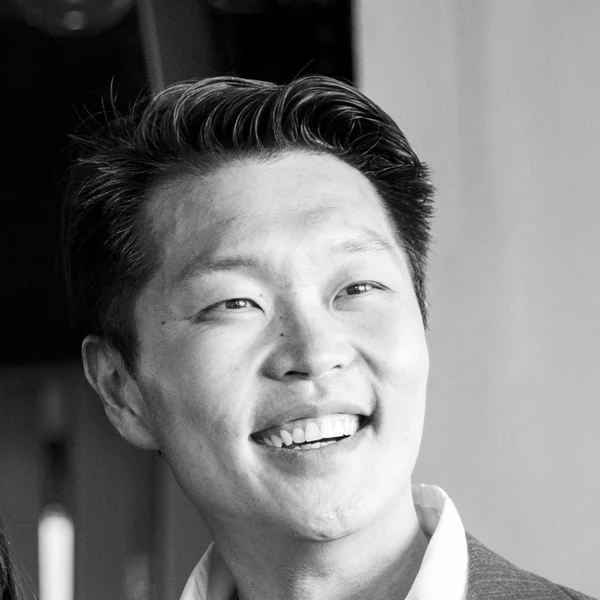
I build data systems that help people understand the world and act on it. That started with satellite signal-processing pipelines for researchers at Raytheon while I was still in high school. My own research followed: environmental sensing at UCLA, mobile health and behavior design at Stanford, grid resiliency at Sandia. In industry it became world-scale infrastructure at AWS, Forward Deployed Engineering across healthcare, energy, and finance at Palantir, and AI and observability at Slack. I keep asking how systems give people more agency over decisions that matter.
I've kept my brain in markdown and git for almost twenty years—journals, notes, integrations, all plaintext—with an agent living inside it. The integrations are the part I'm most bullish on: models get the attention, but data plumbing is what actually powers AI. I wrote that up—ontologies as a shared language for humans and AI—for the second edition of O'Reilly's Observability Engineering.
Long before any of it was normal, my wife and I ran a shared Slack workspace full of bots and home automations, mostly feedback loops for understanding our cat's behavior.
Then I left for climate, wanting impact I could point at: a house that's warmer, a bill that's lower, equipment that actually got installed. You can build good software and a good business and still move none of them. Around then I met James Quazi, and we found kinship, an informal internship that turned into a shared conviction: home energy had to be rebuilt around outcomes, not products, and another app wouldn't be enough. I'm now co-founder and CTO of Balto Energy, transforming energy infrastructure at the point of use—as the customer's energy fiduciary with broad employee ownership.
Frank Chen is co-founder and CTO of Balto Energy, which is transforming energy infrastructure at the point of use—how energy is produced, used, and stored where people live and work. Balto acts as the customer's energy fiduciary and is employee-owned. He develops products and leads engineering teams with a background in behavior design, engineering leadership, systems reliability, and resiliency research.
Before Balto, Frank led special projects in developer infrastructure at Slack, where he focused on making engineers' lives simpler, more pleasant, and more productive. At Palantir, he worked with customers in healthcare, finance, government, energy, and consumer packaged goods to solve their hardest problems by transforming how they use data. At Amazon, he led a front-end and infrastructure team to launch AWS WorkDocs, the first secure multi-platform enterprise document service of its kind. At Sandia National Labs, he researched resiliency and complexity analysis tooling with the Grid Resiliency group.
He's been keeping his brain in markdown + git for almost 20 years—journals, data integrations, everything in plaintext. He built a personal AI agent called Frankly that connected Slack, Linear, Obsidian, and his personal vault with hybrid search. Then he brought the same architecture to his company, where an AI agent now reads the entire knowledge base and onboards new team members from the living state of the company's thinking. He writes about what happens when you give AI access to all of it.
Frank received an M.S. in Computer Science focused in Human-Computer Interaction from Stanford. His thesis studied how the design and psychology of exergaming interventions might produce efficacious health outcomes. With the Stanford Prevention Research Center, he developed health interventions rooted in behavioral theory to create new behaviors through mobile phones. He prototyped early builds of Tiny Habits with BJ Fogg and worked in the Persuasive Technology Lab. He received a B.S. in Computer Science from UCLA, where he researched networked systems and image processing with the Center for Embedded Networked Sensing. With the RAND Corporation, he built research systems to support group decision-making.
modus operandi
Most AI demos end where the real work starts. I build systems for what comes after: agents, graphs, teams, and workflows that have to survive permits, people, bills, and operations with consequences. I write about what actually ships vs. what demos well, how culture scales in startups, and why I put my brain in a git repo 20 years ago—then did the same thing for our company and gave an AI agent the keys.
recent writing
- Steering Beats ScaleWhen scale outruns the feedback loop, numbers rot.
- The Company as a CodebaseEvery workflow ships two artifacts: the result, and a versioned improvement to the system that produced it.
selected writing
- FD(x): Forward Deploy to Solve the UntrainableThe cleanest number in our dataset was a lie, and only the operator who owns the loop knew why.
- What It Feels Like to Rebuild a Company Around a GraphOur CEO went forward-deployed into the ontology. The wonder and the friction, honestly.
- The Handoff Was the Bug. Vertical AI Is the Rewrite.Quality used to come from approvals. Now it comes from correction.
- The Operations CEO Doesn't Wait for the DashboardWhat happens when the forward-deployed engineer is the CEO himself.
- The Moat Is What You CaptureReasoning gets cheaper. Capture compounds.
- We Built the Enterprise Brain. It Was the Easy Part.Fat skills, one per work function.
- Our AI Onboards New Hires Better Than We DoHow we use Claude Code to personalize onboarding from a living knowledge base
- We Put Our Entire Company's Brain in a Git RepoARKS, AI agents, and what happens when your company's knowledge lives in plain markdown
- AI Has Entered the ChatHumans, AI and the Art of Collaboration
- Design your Personal Operating System—Habits